

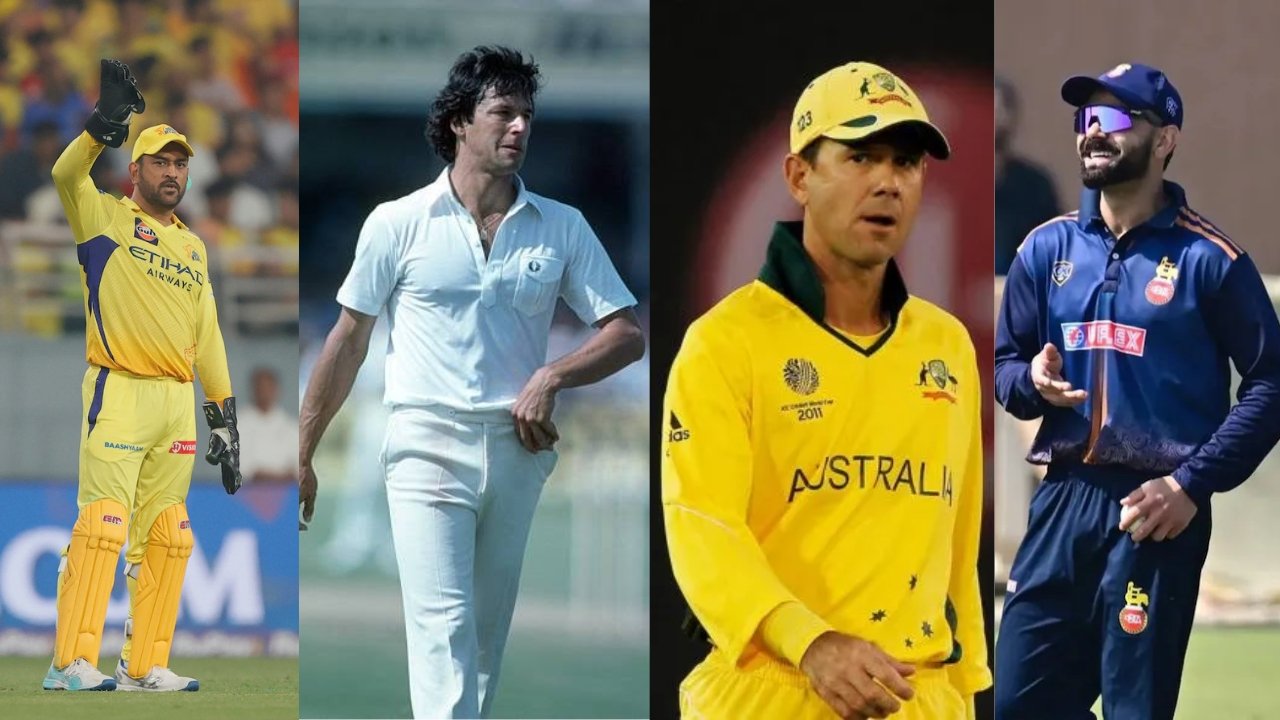
The term “GOAT” has transcended sports terminology to become a defining phrase in modern cricket discourse. Standing for “Greatest of All Time,” it represents the pinnacle achievement in any field, and in cricket, this title is the subject of endless debate, passionate arguments, and thoughtful analysis. Whether you’re discussing the GOAT of cricket in India, the best captain to ever grace the game, or the supreme performer in limited-overs formats, the conversation has evolved far beyond simple statistics. It now encompasses legacy, era context, competitive environment, opposition quality, and the indelible mark left on the sport itself. This comprehensive guide explores every dimension of the GOAT debate, examining legendary players across different formats, generations, and specializations.
Understanding the GOAT Debate in Modern Cricket
The concept of identifying a “Greatest of All Time” has fascinated cricket enthusiasts for decades. However, determining who truly deserves this crown is far from straightforward. Unlike other sports with clear statistical benchmarks, cricket’s complexity lies in its multiple formats, varying playing conditions, and the evolution of the game itself. A player who dominated Test cricket might not have excelled in limited-overs formats, and vice versa. Furthermore, the quality of opposition, the technology available during different eras, and even rule changes significantly influence performance metrics.
Consider how different generations faced vastly different challenges. Players from the 1990s battled against reverse-swing bowlers and traditional playing conditions, while modern cricketers face T20 specialists, flat pitches designed for batting, and unprecedented levels of conditioning and fitness standards. The GOAT argument isn’t merely about who scored the most runs or took the most wickets—it’s about who maximized their potential within their era and transformed the game for future generations. This nuanced understanding forms the foundation of any credible GOAT discussion in cricket.
The GOAT of Cricket in India: A Legacy Like No Other
When discussing the GOAT of cricket in India, the conversation inevitably circles back to Sachin Tendulkar, a player whose influence on Indian cricket cannot be overstated. Known as the “God of Cricket,” Tendulkar’s career, spanning 24 years redefined what it meant to be a cricketer in the modern age. With 15,921 Test runs at an average of 53.78 and 18,426 ODI runs at an average of 44.83, Tendulkar’s statistical foundation remains extraordinary. More importantly, he scored 100 international centuries – a mark so unique that it stood alone for years as an unconquerable peak.
Tendulkar’s influence extended beyond mere statistics. He was cricket’s ambassador during a transformative period when India transitioned from being underdogs to a cricket superpower. His technical perfection, combined with his versatility across formats and conditions, made him the template for modern batting excellence. Every young Indian cricketer aspired to replicate his balance, timing, and stroke-making prowess.
However, the GOAT of cricket in India narrative is undergoing a seismic shift. Virat Kohli has emerged as a formidable challenger to Tendulkar’s legacy. With 52 ODI centuries, surpassing Tendulkar’s 49, and maintaining an ODI average of 58.02 with a strike rate of 93.41, Kohli has rewritten the record books. Legendary cricketer Sunil Gavaskar recently declared Kohli as the GOAT of ODI cricket, stating that when a player passes Sachin Tendulkar’s records, “you know where you stand.” Former Australian captain Ricky Ponting has also endorsed Kohli as the best one-day batter he has ever witnessed, lending significant weight to this assessment. The Indian cricket landscape now features two generations of excellence, with Kohli representing the modern era’s batting supremacy.
The GOAT of Cricket Captains: Leadership That Defines Eras
Cricket captaincy represents one of sport’s most challenging responsibilities. The captain must balance aggressive gameplay with tactical acumen, inspire teammates under pressure, and make split-second decisions that determine outcomes. When examining the GOAT of cricket captains, several names dominate the conversation, each bringing unique qualities to their leadership.
MS Dhoni: The Captain Cool Era
MS Dhoni stands unquestionably among cricket’s greatest captains. Known as “Captain Cool,” Dhoni led India to three World Cups: the 2007 ICC T20 World Cup, the 2011 ODI World Cup, and the 2013 Champions Trophy. His captaincy record in international cricket spans 332 matches with 178 victories. What distinguished Dhoni’s leadership was his calm demeanor under pressure, strategic innovation, and ability to extract performances from players in crucial moments. The 2011 World Cup final epitomizes his captaincy, leading India to their second ODI World Cup against a West Indies side chasing history.
Beyond international cricket, Dhoni revolutionized franchise cricket by leading Chennai Super Kings to five IPL titles. His consistency and success across formats cemented his place as one of cricket’s most successful captains ever. Sports analysts have consistently rated Dhoni as the GOAT among IPL captains, with his teams making it to knockout stages in virtually every season CSK participated.
Imran Khan: The Transformative Leader
Imran Khan’s captaincy represents one of sport’s greatest redemption arcs. After leading Pakistan unsuccessfully in the 1987 World Cup, Khan returned to captain the nation to their first World Cup victory in 1992, an achievement against a backdrop of internal strife and limited international support. What made Khan’s captaincy extraordinary was his ability to unite a group of talented but underutilized players and transform them into World Cup winners. His tactical acumen, combined with his ability to inspire through personal example (he also took the championship-winning wicket in the 1992 final), elevated him beyond typical captains.
Khan’s captaincy philosophy centered on innovation, adaptability, and building team cohesion. He understood that greatness in leadership transcends statistical records—it’s about transforming the trajectory of a cricket nation. His legacy influenced how Pakistan approached team-building and strategic planning for decades after his retirement.
Ricky Ponting: The Dominant Force
Ricky Ponting’s captaincy statistics are staggering: 220 wins in 324 matches, an extraordinary win percentage that showcases dominance rarely seen in Test cricket. Ponting led Australia during their most dominant era, winning consecutive World Cups in 2003 and 2007 without losing a single match. His aggressive captaincy style, combined with his exceptional batting prowess, created an Australian team that was nearly unbeatable on home soil.
Ponting’s ability to manage a star-studded squad, maintain team discipline, and make bold decisions positioned Australia as the gold standard in cricket leadership during the 2000s. However, his later captaincy struggles and India’s rise have provided context to his achievements—he flourished during an era when Australia was ascendant globally.
The GOAT of Cricket in ODI Format: A Statistical Evolution
The One-Day International format has witnessed the most dramatic transformation in cricket. From a 60-overs slugfest in earlier days to the dynamic 50-overs spectacle of today, ODI cricket has continuously evolved. Identifying the GOAT of ODI cricket requires evaluating consistency, strike rate, average, century frequency, and performance in crucial matches.
Virat Kohli’s Ascendancy
The recent narrative around ODI cricket has become increasingly dominated by Virat Kohli’s extraordinary statistics. His 52 ODI centuries represent not just a number but a philosophical shift in ODI batting, combining aggressive intent with technical soundness. Kohli’s average of 58.02 across 306 ODIs places him in a statistical stratosphere previously occupied by very few batters. Most remarkably, he achieves this while maintaining a strike rate of 93.41, proving that aggressive batting and high averages are compatible in modern cricket.
What distinguishes Kohli’s ODI record is the context. He’s achieved these milestones while batting in a more consistently strong Indian batting ecosystem, but against world-class bowling attacks of the modern era. His success in chasing targets, holding the record for most ODI centuries in successful chases, demonstrates his value in match-winning situations.
Sachin Tendulkar’s Historical Significance
While Kohli has surpassed Tendulkar’s century record, many analysts argue that Tendulkar’s job was considerably harder. Tendulkar opened the innings during the 1990s and 2000s when aggressive batting was less normalized and when reverse-swing bowling was at its peak lethality. Facing bowlers like Wasim Akram, Shaun Pollock, and Muttiah Muralitharan with different playing conditions meant Tendulkar had to invent the modern ODI opener template. His 18,426 runs at an average of 44.83 in an era of lower-scoring matches is contextually more impressive than surface-level comparisons suggest. The debate between Kohli and Tendulkar ultimately reflects the evolution of ODI cricket itself—higher-scoring, flatter pitches, and more aggressive batting approaches benefit modern players.
The GOAT of Cricket in T20 Format: Explosive Excellence
T20 cricket has revolutionized how the game is played and consumed. The format’s explosive nature, compressed timeframes, and emphasis on aggressive batting have created different legends from traditional formats. When discussing the GOAT of cricket in T20, the conversation shifts from pure statistics to entertainment value, match-winning ability, and format-specific excellence.
Babar Azam: Pakistan’s Modern Icon
Babar Azam has emerged as T20 cricket’s most complete modern batter. His ability to seamlessly transition between formats while maintaining high averages sets him apart. In T20Is, Babar maintains an average of 39.83 with 4,302 runs in 131 matches, demonstrating consistency in a format built on aggression and risk-taking. What makes Babar special is his adaptability—he can anchor innings, accelerate when needed, and handle pressure situations across different opposition.
Rohit Sharma: The Franchise Revolution
Rohit Sharma has become synonymous with T20 excellence, particularly in the Indian Premier League. His explosive batting, combined with his leadership qualities, has made him the face of modern T20 cricket. With 11,427 ODI runs at an average of 49.22 and multiple T20 titles as both captain and player, Rohit represents the template for modern T20 success.
Format Evolution and GOAT Status
The T20 GOAT conversation differs from Test or ODI formats due to the availability of more recent data. Players like David Warner, Virat Kohli (in T20 specifically), and AB de Villiers have all left indelible marks on the format. The GOAT title in T20 increasingly goes to those who have dominated franchise leagues like the IPL, Big Bash League, and T20 World Cups simultaneously—a balance very few have achieved consistently.
The GOAT of Cricket in IPL: Franchise Excellence Redefined
The Indian Premier League revolutionized cricket by merging entertainment, innovation, and traditional sporting excellence. Identifying the GOAT of cricket in IPL requires evaluating performance across seasons, impact on team success, consistency, and ability to perform in high-pressure matches.
Mahendra Singh Dhoni: The IPL Architect
MS Dhoni stands unquestionably as the GOAT of IPL captains and competitors. Leading Chennai Super Kings to three IPL titles and consistently guiding the team to knockout stages, Dhoni’s IPL legacy is unmatched. His calmness in death overs, ability to read match situations, and consistent batting performances have made him the face of CSK’s dominance. Beyond captaincy records, Dhoni has maintained impressive batting statistics in the IPL, combining longevity with effectiveness across multiple seasons.
Virat Kohli: The Batting Colossus
Virat Kohli holds the record for the most runs in IPL history with 8,004 runs in 257 matches, averaging 38.67. His 2016 season, when he scored 973 runs in a single IPL edition, remains the benchmark for batting excellence in the tournament. Kohli’s consistency across seasons and his ability to produce match-winning performances have made him arguably the greatest IPL batter, though his captaincy record with Royal Challengers Bangalore remains controversial.
Rohit Sharma: The Four-Time Champion
Rohit Sharma’s leadership has resulted in Mumbai Indians winning four IPL titles—more than any other franchise captain. His opening batting average of 48.76 in ODIs and his consistent franchise performances across T20 leagues establish him as a key figure in IPL’s GOAT conversation. The combination of captaincy success and personal batting excellence makes Rohit a formidable contender.
Lasith Malinga: The Death Bowling Specialist
In the IPL’s bowler category, Lasith Malinga stands out with 170 wickets at an average of 19.79. His ability to bowl yorkers in death overs, his performance in IPL finals, and his consistent wicket-taking across seasons have established him as the GOAT of IPL bowlers. Malinga’s departure from cricket left a notable void in franchise bowling excellence.
The GOAT of Cricket Wicket-Keepers: Behind-the-Stumps Excellence
The wicket-keeper position requires a unique combination of athletic skill, tactical understanding, and batting ability. Evaluating the GOAT of cricket wicket-keepers involves assessing both keeping and batting prowess.
MS Dhoni: The Modern Standard-Bearer
MS Dhoni’s impact on wicket-keeping cricket cannot be overstated. His innovative captaincy, combined with his exceptional keeping skills and lower-order batting explosiveness, redefined the wicket-keeper’s role. With 829 dismissals in international cricket (the third-most by any wicket-keeper), Dhoni’s keeping efficiency and his ability to contribute significantly with the bat positioned him uniquely among wicket-keepers.
Remarkably, when asked to choose the greatest wicket-keeper in cricket history, legendary Australian keeper Adam Gilchrist selected MS Dhoni over himself. Gilchrist’s reasoning centered on Dhoni’s ability to win major tournament titles and his consistency across different contexts. This endorsement from a player universally recognized as one of cricket’s greatest wicket-keepers significantly validates Dhoni’s GOAT status in this category.
Adam Gilchrist: The Aggressive Pioneer
Adam Gilchrist revolutionized wicket-keeping by introducing aggressive batting to the position. With 905 dismissals across formats and a career average of over 40 in Test cricket (exceptional for a wicket-keeper), Gilchrist elevated the position’s batting expectations. His explosive batting in the 2007 World Cup final (149 off 104 balls) exemplified his impact-based approach to cricket.
Kumar Sangakkara: The Elegant Athlete
Kumar Sangakkara’s grace, technical excellence, and consistency have made him another strong contender for GOAT status among wicket-keepers. His ability to bat high up the order, average above 50 in most formats, and keep efficiently established a different template for the position compared to Dhoni’s aggressive approach.
Beyond the Legends: The Broader GOAT Spectrum
While individuals dominate GOAT conversations, the debate extends to other dimensions of cricket excellence. The GOAT of cricket in various contexts reflects the sport’s complexity and the different pathways to greatness.
All-Around Excellence
Players like Jacques Kallis, Imran Khan, and Sanath Jayasuriya represent the all-rounder template. Their ability to impact matches through both batting and bowling elevates them beyond specialists. Jacques Kallis, with 13,289 Test runs and 131 Test wickets, represents the modern all-rounder archetype, while Imran Khan symbolized the all-rounder captain who could influence matches single-handedly.
Bowling Excellence
While batters tend to dominate GOAT conversations, extraordinary bowlers deserve recognition. Muttiah Muralitharan’s 800 Test wickets and 534 ODI wickets, achieved with an exceptionally high economy rate, position him as the GOAT among spinners. Shane Warne’s revolutionary leg-spin bowling and his “Ball of the Century” changed how spin bowling was perceived globally. Glenn McGrath’s consistency across formats and his devastating performances in World Cups established him as one of cricket’s greatest fast bowlers.
Sir Don Bradman: The Untouchable Baseline
Any GOAT discussion must acknowledge Sir Don Bradman, whose Test batting average of 99.94 remains unmatched across all formats and across all eras. Bradman’s dominance during the 1930s and 1940s was so complete that many statisticians and analysts argue he remains the ultimate GOAT of cricket, regardless of format or era. His average transcends time, technology, and playing conditions in a way no other player has achieved.
The 2026 GOAT Rankings: A Contemporary Perspective
As cricket moves into 2026, new perspectives on GOAT status continue to emerge. Virat Kohli’s record-breaking achievements in ODI cricket have shifted global perceptions. Jasprit Bumrah, India’s premier fast bowler, has garnered recognition from cricket legends as among the GOAT bowlers due to his exceptional performance across formats with an average of 20.47 and 455 career wickets.
The IPL’s continued evolution and the emergence of T20 cricket as the dominant format have created new legends and redefined what “GOAT” means in franchise cricket. Modern players like Suryakumar Yadav, Pat Cummins, and Rashid Khan are establishing new benchmarks in T20 excellence.
Conclusion
The question “Who is the GOAT of cricket?” remains gloriously unanswered and arguably unanswerable in absolute terms. The sport’s evolution, multiple formats, varying eras, and the different pathways to greatness ensure that GOAT status is contextual, generational, and ultimately subjective. Sachin Tendulkar remains the “God of Cricket” for his pioneering excellence and influence on generations of players. Virat Kohli has become the modern embodiment of batting excellence, rewriting record books with his aggressive approach. MS Dhoni transformed how cricket leadership and wicket-keeping are perceived.
The true GOAT of cricket may not be a single individual but rather the collective evolution the sport has undergone through these legendary figures’ contributions. Each generation has produced its champions, each format has crowned its kings, and each era has defined excellence through its own lens. The GOAT debate’s enduring nature speaks to cricket’s depth as a sport and the remarkable consistency with which it produces players of extraordinary ability. Rather than seeking a definitive answer, perhaps the real beauty lies in celebrating how different cricket eras have each produced their own “Greatest of All Time”, a reflection of the sport’s capacity to continuously reinvent itself while honoring its rich history.
Also Read:
