

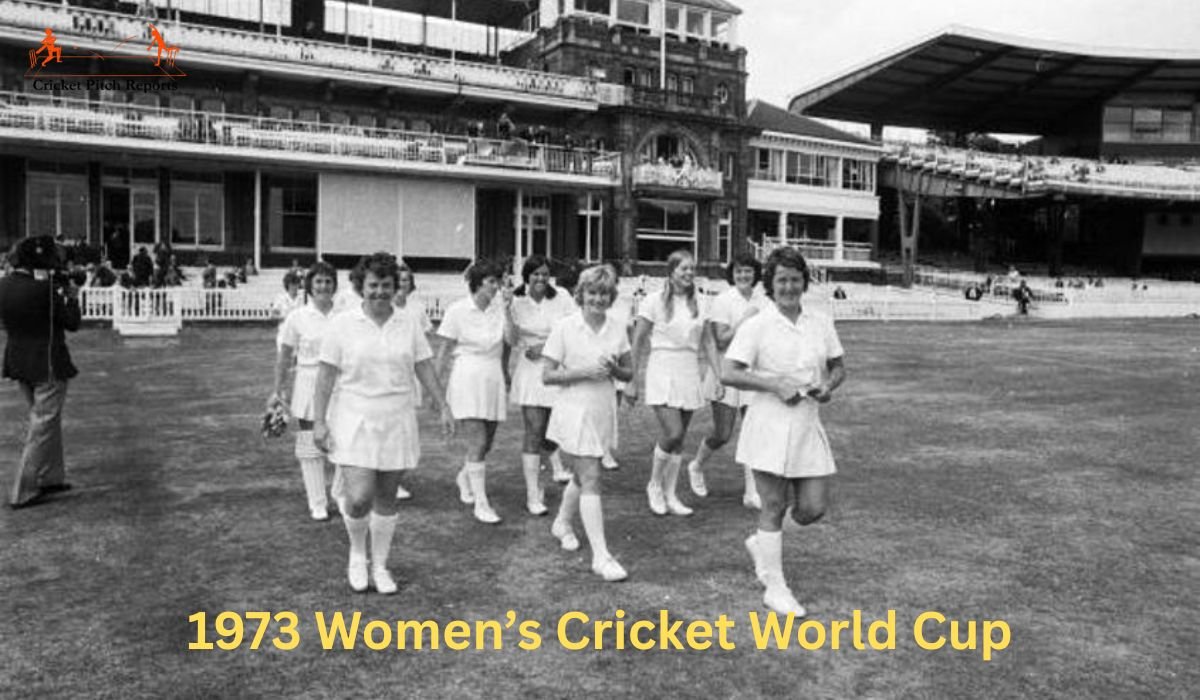
The 1973 Women’s Cricket World Cup occupies a unique place in cricket history, being the first ever One Day International (ODI) WC – held two years before its men’s counterpart. 6) England – June 20 to July 28, 1973 This was the inaugural women’s Cricket World Cup and with seven teams participating; the tournament adopted a whole new dimension. More to the point than the scores and statistics, it was a powerful statement about determination, equality and sporting excellence.
The Genesis of the 1973 Women’s Cricket World Cup
It was a dream shared by two visionaries – Rachael Heyhoe Flint and Sir Jack Hayward, an English cricketer, and philanthropist / businessman respectively.
Flint had passed his idea for a global women’s tournament to Hayward, when the two men were playing as professionals in 1971. Some £40,000 in Hayward’s generous largesse made possible the adventure and logistics and travel of putting on the whole thing.
The competition was a 60-over-a-side format, and was run by the International Women’s Cricket Council (IWCC). The 1973 version therefore contributed to being a trail-blazing step in the development of women’s tennis.
Participating Teams and Tournament Format
A total of seven teams competed in this inaugural event:
| Team | Representation |
| England | Host Nation |
| Australia | Traditional Rival |
| New Zealand | Established Women’s Cricket Nation |
| Jamaica | Caribbean Representation |
| Trinidad & Tobago | Caribbean Representation |
| International XI | A combined team of global players |
| Young England | Developmental team from England |
The tournament was a round-robin format where each team played each other once. The team with the most points accumulated by the end of all matches would be determined as victor.
No final was played but the last round match between England and Australia effectively served as one after both teams were leading on the ladder heading into that fixture.
England’s Historic Triumph
The title decider was at Edgbaston, Birmingham where England played arch-rivals Australia. England won the toss and decided to bat, making a big total 279/3 in their overs.
Opener Enid Bakewell played one of the most famous innings in the history of women’s cricket to hit a sublime 118, and captain Rachael Heyhoe Flint made an important 64.
In response, Australia faltered under England’s tight bowling, scoring just 187/9. The 92-run win gave England the distinction as the maiden Women’s Cricket World Cup champions.
The presentation wasn’t bad, either – Princess Anne presented the trophy to the England team before they all were guests at a reception at 10 Downing Street with Prime Minister Edward Heath in recognition of a major achievement for women’s sport.
Top Performers of the Tournament
| Category | Player | Team | Performance |
| Leading Run-Scorer | Enid Bakewell | England | 264 runs |
| Leading Wicket-Taker | Rosalind Heggs | Young England | 12 wickets |
Bakewell’s consistent performances at the top order established her as one of the pioneers of women’s cricket, while Rosalind Heggs showcased the depth of young talent coming through the ranks in England.
Impact and Legacy of the 1973 Women’s World Cup
The 1973 championship was about more than what transpired on the playing surface. It demonstrated that women’s cricket had the technical ability, competitive intensity and marketability to stand alone.
However, this first event is considered to be the forerunner of a series of women’s world cups hosted by England, as in 1978, the International Cricket Council (ICC) declared that it will award Women’s Cricket World Cup regular status.
The establishment of the West Indies women’s cricket team was another enduring effect. Prior to 1973, Caribbean nations like Jamaica and Trinidad & Tobago played as separate entities. The success of the 1973 version inspired these nations to come together as one, and created an even stronger regional team.
It also led to generations of women cricketers taking up the sport as a viable career option, starting that process which has taken us full circle to modern stars such as Ellyse Perry, Meg Lanning, Mithali Raj and Heather Knight keeping the tradition alive.
Why the 1973 Women’s World Cup Still Matters
In the age of women’s cricket likes of today, the full houses, professional leagues worldwide and global ticket sales, it is worth to remember where it all started. The 1973 Women’s Cricket World Cup represented vision, courage and equality – it shattered perceptions and proved women could play at the highest level.
The example of pioneers such as Rachael Heyhoe Flint and Sir Jack Hayward is the inspiration. Their faith in the possibilities for the game changed the face of women’s sport, not just in cricket but across all sports.
Women’s Cricket World Cup Winners List (1973 – 2025)
| Year | Winner Team | Margin | Runner-up Team | Host Country |
| 2025 | India | 52 runs | South Africa | India |
| 2022 | Australia | 71 runs | England | New Zealand |
| 2017 | England | 9 runs | India | England |
| 2013 | Australia | 114 runs | West Indies | India |
| 2009 | England | 4 wickets | New Zealand | Australia |
| 2005 | Australia | 98 runs | India | South Africa |
| 2000 | New Zealand | 4 runs | Australia | New Zealand |
| 1997 | Australia | 5 wickets | New Zealand | India |
| 1993 | England | 67 runs | New Zealand | England |
| 1988 | Australia | 8 wickets | England | Australia |
| 1982 | Australia | 3 wickets | England | New Zealand |
| 1978 | Australia | N/A (Points) | England | India |
| 1973 | England | N/A (Points) | Australia | England |
Conclusion
The 1973 Women’s Cricket World Cup was much more than a mere tournament – it was an inflexion point in the history of women’s cricket. It provided the sport’s first global showcase, demonstrated the quality of female cricketers, and led to international status as well as financial and professional opportunities.
The event’s pioneering and inclusive philosophy still reverberates around every women’s cricket match to this day, as a reminder that all great moments, no matter how historic, start with an idea and faith.
FAQs
1. When was the first Women’s Cricket World Cup held?
Ans: The first Women’s Cricket World Cup was held in England from June 20 to July 28, 1973.
2. Who won the first Women’s Cricket World Cup?
Ans: England won the inaugural 1973 Women’s Cricket World Cup by defeating Australia in the final round-robin match.
3. How many teams participated in the 1973 Women’s World Cup?
Ans: A total of seven teams participated – England, Australia, New Zealand, Jamaica, Trinidad & Tobago, International XI, and Young England.
4. Who was the top run-scorer of the tournament?
Ans: Enid Bakewell of England scored the most runs, amassing 264 in the tournament.
5. Why is the 1973 Women’s World Cup significant?
Ans: It was the first-ever ODI World Cup in cricket history, held two years before the men’s edition, and it paved the way for women’s cricket to grow internationally.
